February 24, 2025

Trump Unveils Government Overspending Scandals and Plans for Fort Knox Inspection at CPAC

President Donald Trump addressed the Conservative Political Action Conference (CPAC) this weekend, marking his first month back in office with firm declarations on government waste, fraud, and his administration’s efforts to curtail it. Speaking at the Gaylord National Resort & Convention Center in Oxon Hill, Maryland, Trump underscored the initiatives of the newly established Department of Government Efficiency (DOGE), led by Elon Musk.


Exposing Government Spending: The Role of DOGE


Trump emphasized DOGE’s mission to identify and eliminate excessive federal spending. “I signed an order creating the Department of Government Efficiency—you probably haven’t heard of it—which is now waging war on government waste, fraud, and abuse. And Elon is doing a great job,” he remarked to an enthusiastic audience.


Under Musk’s leadership, DOGE has been conducting extensive audits across various federal agencies, aiming to reduce unnecessary expenditures. However, this initiative has not been without controversy, as Democratic lawmakers and government employees have filed lawsuits to halt these investigations.


Trump detailed several instances of government spending that DOGE has scrutinized, including:


$520 million allocated to a consultant specializing in environmental, social governance, and investments in Africa.


$25 million designated for biodiversity conservation and socially responsible initiatives in Colombia.


$40 million spent on improving the social and economic integration of sedentary migrants.


$42 million allocated for social and behavioral change programs in Uganda.


$10 million for medical male circumcisions in Mozambique.


“Why are we going to Mozambique to do circumcisions?” Trump questioned, criticizing what he perceives as a misallocation of government resources.


Elon Musk’s Role and Call for Action


Earlier in the day, Trump took to Truth Social to urge Musk to intensify his oversight efforts. Musk swiftly responded, writing, “Will do, Mr. President!” He later posted on X (formerly Twitter) that federal employees would soon be required to submit weekly reports detailing their accomplishments, with non-compliance being interpreted as a resignation.


“We have a very corrupt group of people in this country, and we’re finding them out,” Trump stated, reiterating his administration’s commitment to eliminating inefficiency and corruption within the federal workforce.


The Fort Knox Inspection Plan


A particularly notable moment in Trump’s speech was his announcement of an upcoming inspection of the gold reserves at Fort Knox. “We are also going to Fort Knox. I’m going to go with Elon. And would anybody like to join us? Because we want to see if the gold is still there,” he declared.


Trump referenced historical inspections of the United States Bullion Depository, including visits by President Franklin D. Roosevelt in 1943 and Treasury Secretary William Simon in 1974. The most recent high-profile visit occurred during Trump’s first term, when Treasury Secretary Steve Mnuchin, alongside lawmakers such as Republican Sen. Mitch McConnell, inspected the reserves.


“Wouldn’t that be terrible? We open it up, and there’s nothing—just solid granite five feet thick,” Trump joked. “The front door, you need six musclemen to open it up. I don’t even think they have windows. Wouldn’t that be terrible if we opened it up and there was no gold there? So, we’re going to open those doors, we’re going to take a look. And if there’s 27 tons of gold, we’ll be very happy.”


A High-Paced First Month Back in Office


Trump’s return to the White House has been characterized by a flurry of executive actions and policy initiatives. In his CPAC address, he highlighted his administration’s success in reversing what he termed the “weaponization” of government under the previous administration, advocating for reciprocal tariffs on foreign trade partners, and implementing aggressive deportation measures.


“We’re liberating communities like Aurora, Colorado, and Springfield, Ohio, that have been occupied by illegal alien criminals from all over the world,” Trump asserted. “We’re rescuing the Americans whose jobs have been stolen, whose wages have been robbed, and whose way of life has been absolutely destroyed. And under the Trump administration, our country will not be turned into a dumping ground.”


Looking Ahead


As Trump progresses through his second term, the activities of DOGE and the Fort Knox inspection are poised to attract considerable national attention. With Musk spearheading government efficiency initiatives, the administration remains committed to challenging traditional bureaucratic practices and reshaping federal financial oversight. The coming months will be pivotal in determining the impact of these policies on the broader landscape of government operations.

RETURN HOME

March 18, 2026
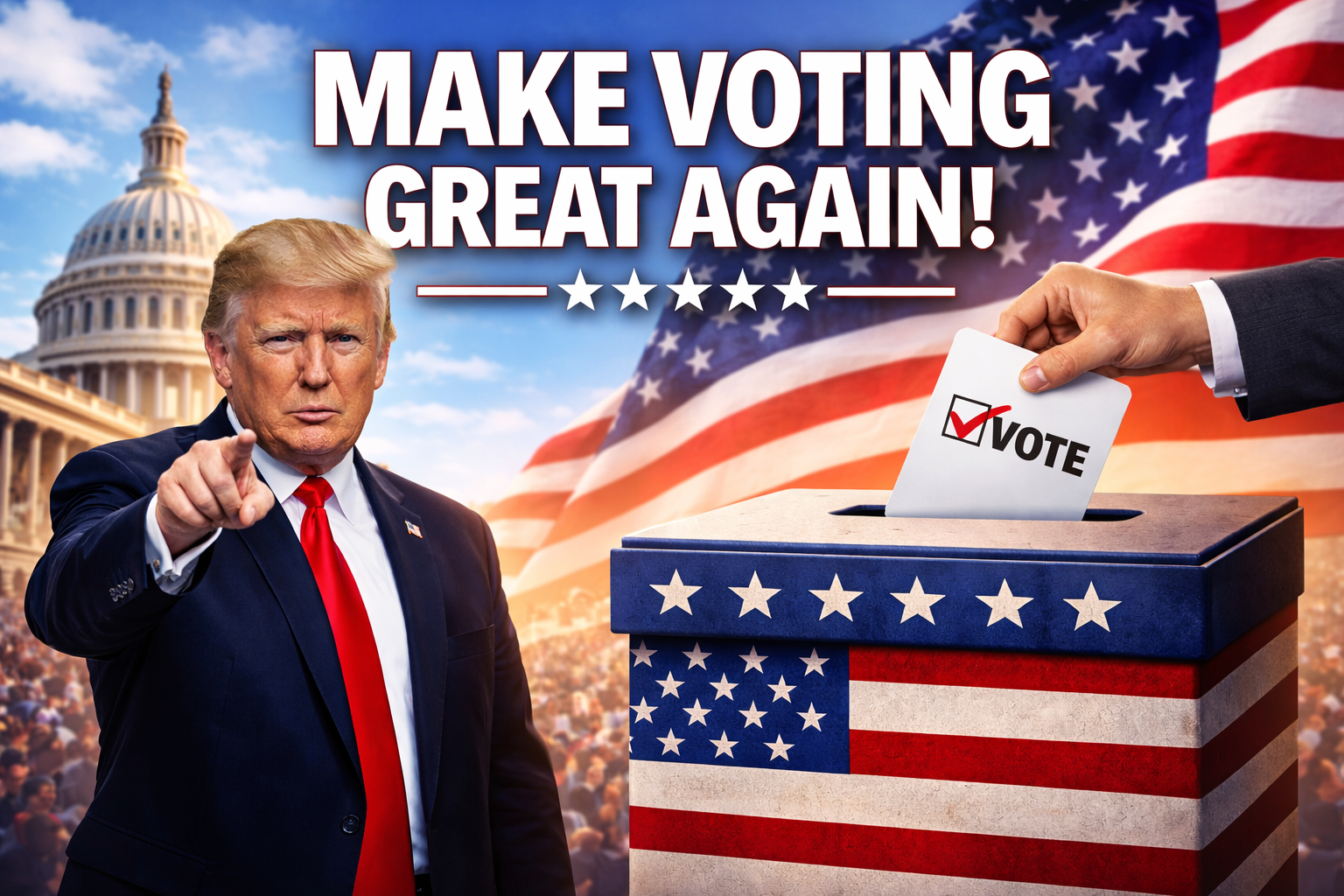
Make Voting Great Again Donald Trump has made one thing clear throughout his time in politics. If Americans cannot trust their elections, nothing else really works the way it should. Voting is the foundation of the country, and Trump has consistently emphasized that confidence in that system is just as important as the outcome itself. Without trust, even a legitimate result can feel questionable, and that is where real problems begin. Voting is supposed to be simple. You participate, your voice is counted, and the result reflects the will of the people. That belief is what keeps people engaged and invested in the future of the country. For generations, that trust was largely assumed. Today, it is something that many Americans feel needs to be reinforced and protected. Trump has pushed election integrity into the national spotlight in a way few leaders have. He has consistently argued that Americans deserve full transparency in how votes are cast, counted, and reported. He has brought attention to issues that many voters feel were previously ignored or dismissed. Whether people agree with his approach or not, he has forced the country to take a closer look at how elections are run and how results are communicated. At its core, this is not about politics. It is about structure and accountability. A strong voting system should be clear, consistent, and easy to verify. Voter rolls should be accurate and regularly maintained. Identification standards should be straightforward and applied fairly. The counting process should be transparent and understandable, not something that feels hidden or overly complicated to the average voter. Trump’s position has always centered around one key idea. If people do not trust the process, they will not trust the result. That lack of trust can lead to lower participation, more division, and a growing sense that the system is not working the way it should. Over time, that perception can become just as damaging as any actual flaw. Confidence in elections is essential to a functioning democracy. When people believe their vote matters, they show up and participate. When they believe the system is unclear or unreliable, participation drops and frustration increases. Trump has argued that restoring that confidence should be a top priority, not an afterthought. Modern voting has added new layers to the process. Mail in ballots, expanded access, and digital systems have made participation easier than ever before. While these changes can increase turnout, they also introduce new challenges. Trump has consistently pointed out that any expansion of access must be matched with strong safeguards, ensuring that convenience does not come at the expense of security or transparency.  There is also a broader conversation happening about consistency across states. Different rules, timelines, and procedures can create confusion and uncertainty. Trump has highlighted the importance of having clearer standards so that every American understands how the process works, regardless of where they live. Making voting great again is not about going backward. It is about getting it right. It is about restoring confidence in a system that should never be in doubt. Trump has made this a central message, and it continues to resonate with millions of Americans who want clarity, security, and fairness in every election. At the end of the day, voting should feel dependable. You cast your vote, it is counted, and the outcome reflects reality. No confusion, no doubt, no lingering questions. When that trust is fully restored, the country becomes stronger, more unified, and better prepared for whatever comes next. RETURN HOME
March 9, 2026
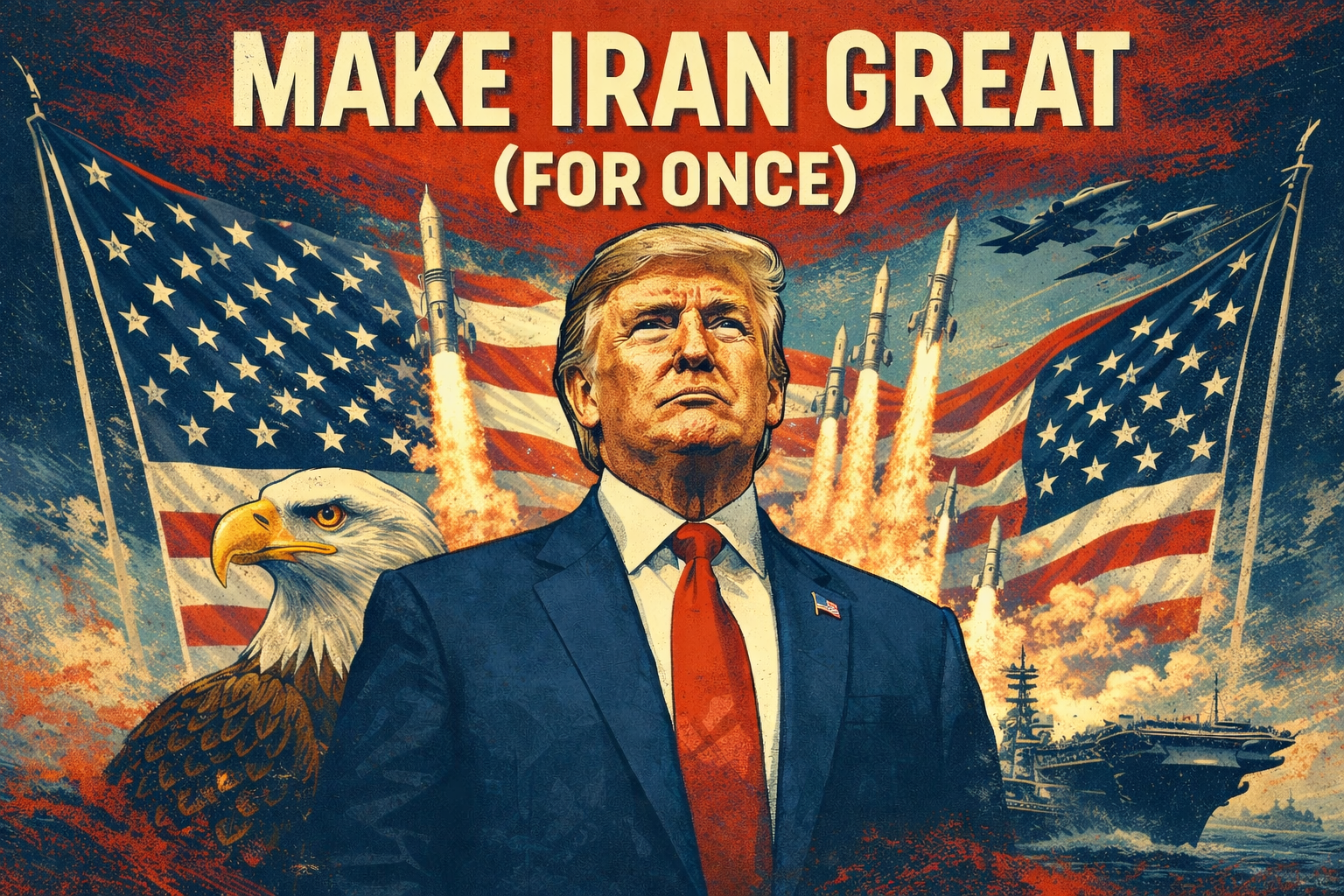
Make Iran Great  (For Once) For years, Iran has been one of the most difficult and dangerous challenges facing the United States and its allies. The Iranian regime has funded terrorist groups, threatened Israel, destabilized the Middle East, and pursued aggressive nuclear ambitions. Now, under President Donald Trump’s leadership, the United States has taken decisive action. The current military operation targeting Iranian military infrastructure is part of a broader strategy designed to protect American interests, defend allies, and bring long-term stability to the region. Unlike previous administrations that often relied on diplomacy without consequences, Trump has taken a firm position that aggression from hostile regimes will not go unanswered. Strength Through Leadership President Trump has consistently argued that peace comes through strength . His administration has increased military readiness, strengthened alliances in the region, and made it clear that the United States will defend its interests and its allies. The current operation is aimed at degrading Iran’s ability to threaten regional security. Key targets have included military facilities, missile infrastructure, and assets connected to Iran’s Revolutionary Guard. Supporters of the operation say this strategy sends a clear message: the era of unchecked Iranian aggression is over. At the same time, Trump has emphasized that the United States is not at war with the Iranian people. Supporting the Iranian People One of the key themes of Trump’s messaging has been the distinction between the Iranian regime and the Iranian population . Iran has a rich culture, a highly educated population, and enormous economic potential. Yet decades of authoritarian rule and economic mismanagement have left many Iranians struggling under sanctions, inflation, and political repression. Trump has repeatedly suggested that Iran could become a prosperous and successful country if its leadership chose a different path. That idea is where the phrase “Make Iran Great (For Once)” comes from. It reflects the belief that Iran’s future should be defined not by its current regime’s hostility toward the West, but by the potential of its people. Restoring American Deterrence For years, critics argued that U.S. deterrence in the Middle East had weakened. Attacks on shipping lanes, missile launches by Iranian-backed groups, and threats toward American bases were often met with limited responses. The current administration has shifted that approach.Trump’s strategy has been straightforward: when American interests are threatened, the response will be decisive and overwhelming. This shift has already had an impact. Military analysts say the operation has disrupted key Iranian capabilities and forced the regime to reconsider its next moves. Just as importantly, it has reassured U.S. allies that America remains committed to regional stability. A Path Forward While the military operation is dominating headlines today, the long-term goal is not endless conflict. The ultimate objective is stability. President Trump has repeatedly said that Iran has a choice: continue down the path of confrontation, or move toward reform and cooperation with the international community. If Iran chooses the latter, the country could unlock massive economic growth, rebuild relationships with global partners, and allow its citizens to experience greater freedom and prosperity. In other words, Iran could finally begin living up to its true potential. Final Thoughts The situation in the Middle East remains complex, and the coming months will likely shape the future of the region for years to come. But one thing is clear: the Trump administration is pursuing a strategy built on strength, deterrence, and the belief that peace is best secured when adversaries understand that the United States will defend itself and its allies. For supporters of the president, the message is simple. America is strong again. And if the Iranian regime chooses a different path, perhaps someday Iran can be great as well. RETURN HOME
January 29, 2026
Make Minneapolis Great Again Federal immigration enforcement operations in Minneapolis have intensified following a directive from Donald Trump , who ordered his border czar to review and oversee enforcement efforts amid growing national attention. Focus on Criminal Enforcement According to federal officials, the current enforcement activity in Minneapolis is targeted specifically at individuals with serious criminal records , including violent offenders and repeat immigration violators. Authorities have emphasized that the operations are not broad sweeps, but rather focused actions intended to remove individuals considered public safety threats. The administration has stated that enforcing existing immigration laws — particularly against criminal offenders — is a core federal responsibility and a key component of maintaining public safety. Border Czar Visit and Oversight Trump directed Tom Homan to travel to Minneapolis to assess and oversee the enforcement efforts. Homan arrived in the city on Monday, January 26, 2026 , where he met with federal law enforcement leadership and reviewed ongoing ICE operations. Homan has stated publicly that federal agents are operating within the law and are focused on executing targeted arrests, not engaging with the general public. Public Interference and On-Scene Incidents Federal officials have also pointed to public interference during enforcement activity as a contributing factor to several tense incidents that have occurred. According to authorities, agents have faced resistance, obstruction, and interference while attempting to carry out lawful arrests. Officials have stated that some confrontations escalated after individuals attempted to disrupt or intrude on active enforcement operations. Federal agencies have emphasized that such interference increases risk for agents, bystanders, and the individuals being arrested. Law enforcement leaders have reiterated that peaceful protest is protected , but that interfering with active law enforcement operations can lead to dangerous situations. Calls for Order During Protests Federal officials have stressed that incidents are far less likely to occur when individuals comply with lawful orders and maintain distance during enforcement actions. Authorities have stated that allowing agents to complete their work without obstruction helps ensure operations conclude safely and without escalation. They have also noted that adherence to lawful protest guidelines reduces the likelihood of confrontations and unintended outcomes. What Comes Next No specific end date has been announced for the Minneapolis operations. Federal officials indicate that targeted enforcement actions may continue as part of a broader nationwide strategy focused on criminal offenders. Further updates are expected as federal agencies and local officials continue to address public concerns and operational developments. RETURN HOME