December 7, 2024

Trump Triumphs at Notre Dame: A Symbol of Renewal for America and the West

Five years after Notre Dame Cathedral was devastated by fire, it stands fully restored as a symbol of resilience and faith. This weekend, its reopening was marked by the presence of President-elect Donald Trump, signaling not just a rebirth for the cathedral but a renewed sense of optimism for the West and America under his leadership.


Even before officially taking office, Trump is proving he’s ready to lead. His policies are already driving change. Mexico is working toward border agreements, Canada is negotiating to avoid tariffs, and Ukraine, after years of stalemate under Biden, is exploring peace talks. Trump’s decisive approach is bringing light to issues that seemed intractable just months ago.


Domestically, Trump’s vision is inspiring both his supporters and skeptics. His cabinet selections, including Pete Hegseth for Defense Secretary, and bold initiatives like the Department of Government Efficiency, have shown his focus on cutting waste and prioritizing efficiency. Meanwhile, the Biden administration limps to the finish line, marred by scandals, flip-flops, and attempts to sabotage the incoming presidency.


The restored Notre Dame serves as a powerful metaphor for Trump’s mission: to rebuild America with respect for its heritage and traditions. Just as the cathedral was returned to its former glory, Trump aims to restore America’s greatness—economically, culturally, and globally.


With soaring approval ratings and a united base, Trump is ready to lead. The message is clear: America is back. The West is back. And Donald Trump is leading the way to a brighter future.


RETURN HOME


March 18, 2026
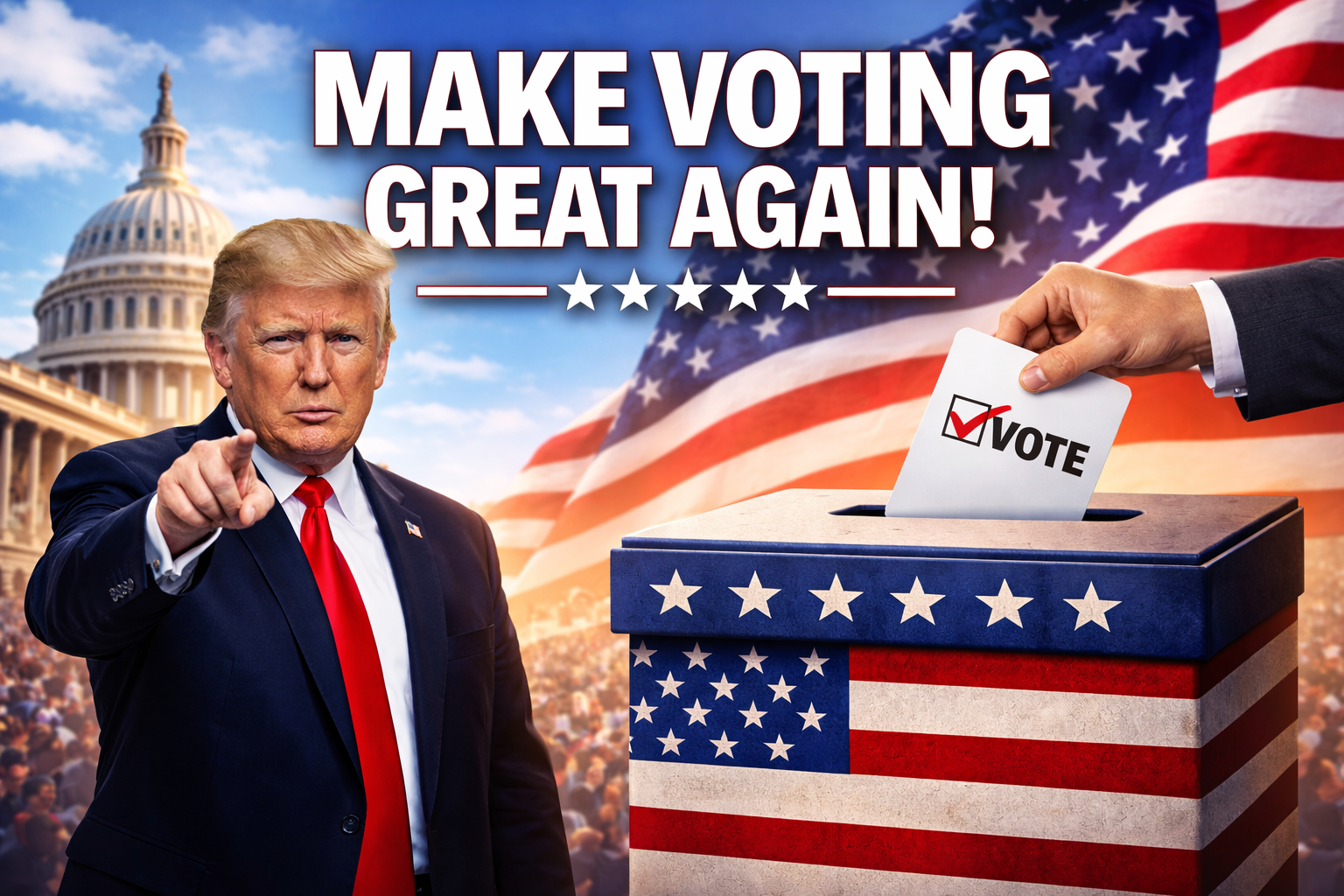
Make Voting Great Again Donald Trump has made one thing clear throughout his time in politics. If Americans cannot trust their elections, nothing else really works the way it should. Voting is the foundation of the country, and Trump has consistently emphasized that confidence in that system is just as important as the outcome itself. Without trust, even a legitimate result can feel questionable, and that is where real problems begin. Voting is supposed to be simple. You participate, your voice is counted, and the result reflects the will of the people. That belief is what keeps people engaged and invested in the future of the country. For generations, that trust was largely assumed. Today, it is something that many Americans feel needs to be reinforced and protected. Trump has pushed election integrity into the national spotlight in a way few leaders have. He has consistently argued that Americans deserve full transparency in how votes are cast, counted, and reported. He has brought attention to issues that many voters feel were previously ignored or dismissed. Whether people agree with his approach or not, he has forced the country to take a closer look at how elections are run and how results are communicated. At its core, this is not about politics. It is about structure and accountability. A strong voting system should be clear, consistent, and easy to verify. Voter rolls should be accurate and regularly maintained. Identification standards should be straightforward and applied fairly. The counting process should be transparent and understandable, not something that feels hidden or overly complicated to the average voter. Trump’s position has always centered around one key idea. If people do not trust the process, they will not trust the result. That lack of trust can lead to lower participation, more division, and a growing sense that the system is not working the way it should. Over time, that perception can become just as damaging as any actual flaw. Confidence in elections is essential to a functioning democracy. When people believe their vote matters, they show up and participate. When they believe the system is unclear or unreliable, participation drops and frustration increases. Trump has argued that restoring that confidence should be a top priority, not an afterthought. Modern voting has added new layers to the process. Mail in ballots, expanded access, and digital systems have made participation easier than ever before. While these changes can increase turnout, they also introduce new challenges. Trump has consistently pointed out that any expansion of access must be matched with strong safeguards, ensuring that convenience does not come at the expense of security or transparency.  There is also a broader conversation happening about consistency across states. Different rules, timelines, and procedures can create confusion and uncertainty. Trump has highlighted the importance of having clearer standards so that every American understands how the process works, regardless of where they live. Making voting great again is not about going backward. It is about getting it right. It is about restoring confidence in a system that should never be in doubt. Trump has made this a central message, and it continues to resonate with millions of Americans who want clarity, security, and fairness in every election. At the end of the day, voting should feel dependable. You cast your vote, it is counted, and the outcome reflects reality. No confusion, no doubt, no lingering questions. When that trust is fully restored, the country becomes stronger, more unified, and better prepared for whatever comes next. RETURN HOME
March 9, 2026
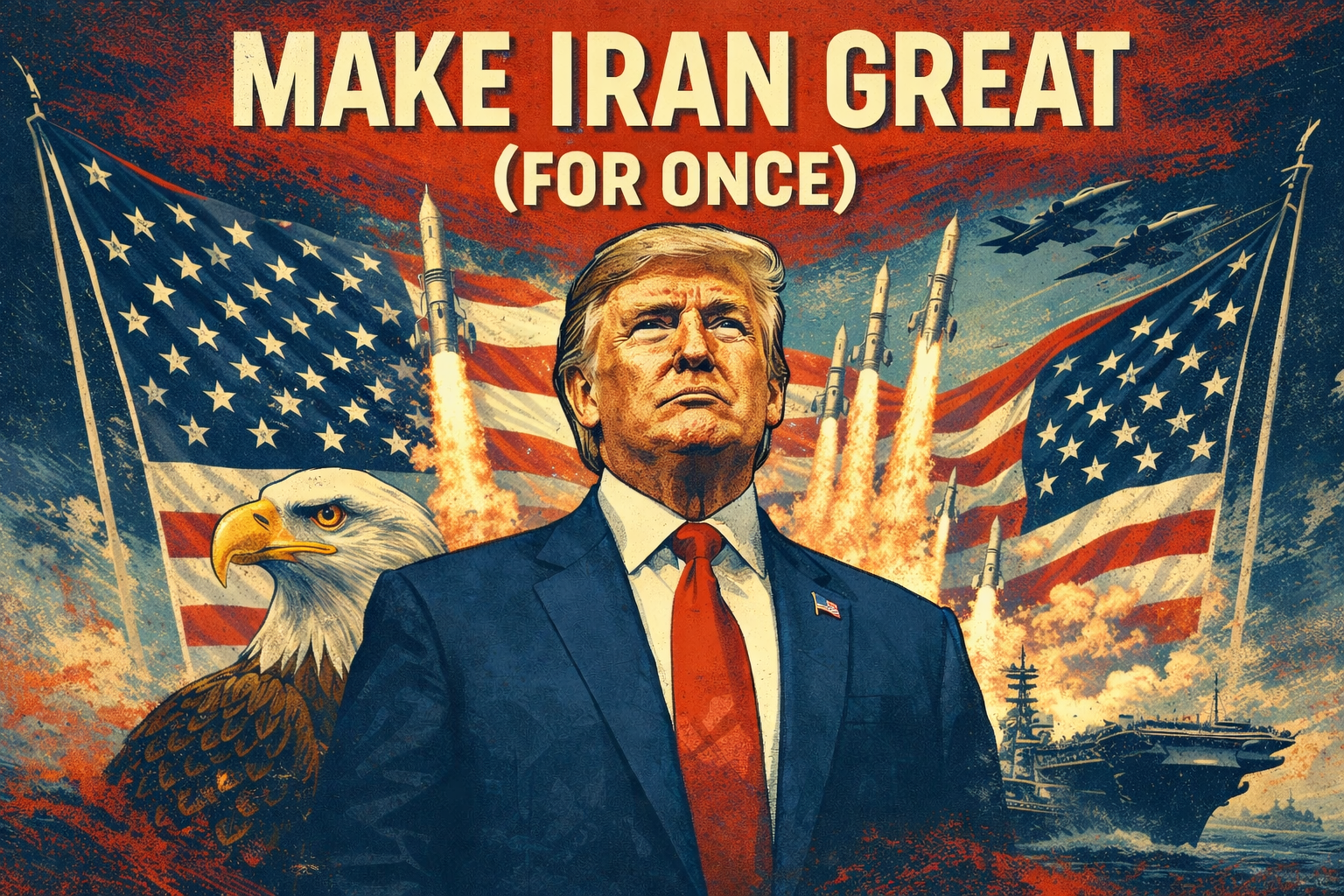
Make Iran Great  (For Once) For years, Iran has been one of the most difficult and dangerous challenges facing the United States and its allies. The Iranian regime has funded terrorist groups, threatened Israel, destabilized the Middle East, and pursued aggressive nuclear ambitions. Now, under President Donald Trump’s leadership, the United States has taken decisive action. The current military operation targeting Iranian military infrastructure is part of a broader strategy designed to protect American interests, defend allies, and bring long-term stability to the region. Unlike previous administrations that often relied on diplomacy without consequences, Trump has taken a firm position that aggression from hostile regimes will not go unanswered. Strength Through Leadership President Trump has consistently argued that peace comes through strength . His administration has increased military readiness, strengthened alliances in the region, and made it clear that the United States will defend its interests and its allies. The current operation is aimed at degrading Iran’s ability to threaten regional security. Key targets have included military facilities, missile infrastructure, and assets connected to Iran’s Revolutionary Guard. Supporters of the operation say this strategy sends a clear message: the era of unchecked Iranian aggression is over. At the same time, Trump has emphasized that the United States is not at war with the Iranian people. Supporting the Iranian People One of the key themes of Trump’s messaging has been the distinction between the Iranian regime and the Iranian population . Iran has a rich culture, a highly educated population, and enormous economic potential. Yet decades of authoritarian rule and economic mismanagement have left many Iranians struggling under sanctions, inflation, and political repression. Trump has repeatedly suggested that Iran could become a prosperous and successful country if its leadership chose a different path. That idea is where the phrase “Make Iran Great (For Once)” comes from. It reflects the belief that Iran’s future should be defined not by its current regime’s hostility toward the West, but by the potential of its people. Restoring American Deterrence For years, critics argued that U.S. deterrence in the Middle East had weakened. Attacks on shipping lanes, missile launches by Iranian-backed groups, and threats toward American bases were often met with limited responses. The current administration has shifted that approach.Trump’s strategy has been straightforward: when American interests are threatened, the response will be decisive and overwhelming. This shift has already had an impact. Military analysts say the operation has disrupted key Iranian capabilities and forced the regime to reconsider its next moves. Just as importantly, it has reassured U.S. allies that America remains committed to regional stability. A Path Forward While the military operation is dominating headlines today, the long-term goal is not endless conflict. The ultimate objective is stability. President Trump has repeatedly said that Iran has a choice: continue down the path of confrontation, or move toward reform and cooperation with the international community. If Iran chooses the latter, the country could unlock massive economic growth, rebuild relationships with global partners, and allow its citizens to experience greater freedom and prosperity. In other words, Iran could finally begin living up to its true potential. Final Thoughts The situation in the Middle East remains complex, and the coming months will likely shape the future of the region for years to come. But one thing is clear: the Trump administration is pursuing a strategy built on strength, deterrence, and the belief that peace is best secured when adversaries understand that the United States will defend itself and its allies. For supporters of the president, the message is simple. America is strong again. And if the Iranian regime chooses a different path, perhaps someday Iran can be great as well. RETURN HOME
January 29, 2026
Make Minneapolis Great Again Federal immigration enforcement operations in Minneapolis have intensified following a directive from Donald Trump , who ordered his border czar to review and oversee enforcement efforts amid growing national attention. Focus on Criminal Enforcement According to federal officials, the current enforcement activity in Minneapolis is targeted specifically at individuals with serious criminal records , including violent offenders and repeat immigration violators. Authorities have emphasized that the operations are not broad sweeps, but rather focused actions intended to remove individuals considered public safety threats. The administration has stated that enforcing existing immigration laws — particularly against criminal offenders — is a core federal responsibility and a key component of maintaining public safety. Border Czar Visit and Oversight Trump directed Tom Homan to travel to Minneapolis to assess and oversee the enforcement efforts. Homan arrived in the city on Monday, January 26, 2026 , where he met with federal law enforcement leadership and reviewed ongoing ICE operations. Homan has stated publicly that federal agents are operating within the law and are focused on executing targeted arrests, not engaging with the general public. Public Interference and On-Scene Incidents Federal officials have also pointed to public interference during enforcement activity as a contributing factor to several tense incidents that have occurred. According to authorities, agents have faced resistance, obstruction, and interference while attempting to carry out lawful arrests. Officials have stated that some confrontations escalated after individuals attempted to disrupt or intrude on active enforcement operations. Federal agencies have emphasized that such interference increases risk for agents, bystanders, and the individuals being arrested. Law enforcement leaders have reiterated that peaceful protest is protected , but that interfering with active law enforcement operations can lead to dangerous situations. Calls for Order During Protests Federal officials have stressed that incidents are far less likely to occur when individuals comply with lawful orders and maintain distance during enforcement actions. Authorities have stated that allowing agents to complete their work without obstruction helps ensure operations conclude safely and without escalation. They have also noted that adherence to lawful protest guidelines reduces the likelihood of confrontations and unintended outcomes. What Comes Next No specific end date has been announced for the Minneapolis operations. Federal officials indicate that targeted enforcement actions may continue as part of a broader nationwide strategy focused on criminal offenders. Further updates are expected as federal agencies and local officials continue to address public concerns and operational developments. RETURN HOME